Acoustic Superiority
Audio is not merely atmospheric; it is a critical vector for data acquisition. In competitive environments, acoustic triangulation dictates positioning, pre-firing, and tactical evasion. Standard gaming headsets mask these vital frequencies under artificial bass boosts. We calibrate for absolute neutrality.
Driver Architecture Analysis
Dynamic vs. Planar Drivers
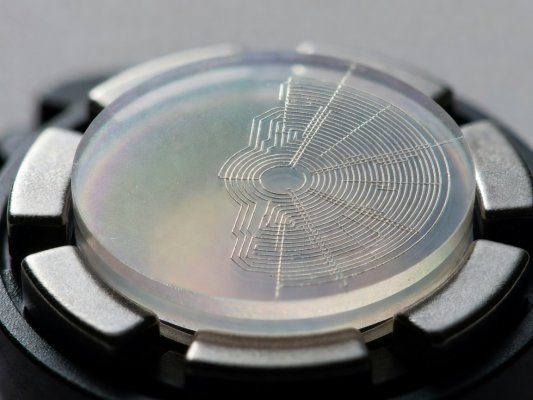
Dynamic drivers utilize a voice coil attached to a conical diaphragm. While efficient, they are prone to modal distortion at high volumes. Planar magnetic drivers distribute electromagnetic force evenly across a flat film, yielding a vastly superior transient response. This allows the instantaneous crack of a digital gunshot to decay immediately without lingering resonance masking subsequent sounds.
Impedance Matching
High-impedance studio monitors (e.g., 250 ohms) require significant voltage to drive cleanly. Plugging these directly into a motherboard results in anemic volume and degraded dynamic range. A dedicated amplifier ensures the driver operates within its optimal efficiency curve.
The Digital-to-Analog Pipeline
The DAC (Digital-to-Analog Converter) is the gatekeeper of acoustic integrity. Motherboard audio implementations suffer from high noise floors due to proximity to the CPU and GPU—components that generate massive electromagnetic interference (EMI).
| Component | Signal-to-Noise Ratio (SNR) | Distortion Tolerance (THD+N) | Classification |
|---|---|---|---|
| Standard Onboard | ~85 dB | 0.1% | Consumer Baseline |
| USB Gaming Dongle | ~95 dB | 0.05% | Mid-Tier Enhancement |
| Discrete External DAC | > 115 dB | < 0.001% | Studio / Competitive Grade |