Optical Clarity
A display is the visual bridge to the engine state. If a panel cannot transition pixel states fast enough to match its refresh rate, the result is motion blur (smearing) that degrades target acquisition. High refresh rates demand equally high pixel response times.
Panel Technology Matrix
OLED relies on self-emissive pixels that can turn off completely, yielding infinite contrast. More crucially for competitive hardware, the lack of liquid crystal gating allows for instantaneous state changes (typically 0.03ms GtG), delivering absolute motion clarity without the overshoot artifacts of heavy LCD overdrive.
Modern Fast-IPS panels push refresh rates to 360Hz and 540Hz. While they cannot match the pixel response of OLED, backlight strobing techniques (such as ULMB 2) can insert black frames to bypass sample-and-hold blur, mimicking CRT-level motion clarity.
Historically favored for the lowest possible latency and cheap implementation of high refresh rates. Though colors are washed out, TN remains a specialized tool for pure framerate optimization in extreme competitive e-sports scenarios.
Refresh Rate Escalation
Moving from 60Hz to 144Hz offers an 84-frame increase, heavily reducing frame latency. Pushing from 240Hz to 360Hz or 540Hz yields diminishing latency returns in absolute milliseconds, but drastically improves the fluidity of enemy player models during fast-panning.
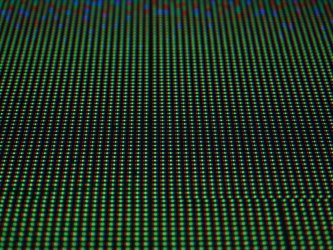
Backlight Strobing & BFI
Black Frame Insertion (BFI) forces the backlight to turn off between frame refreshes. This exploits human persistence of vision, preventing the eye from blurring the image as it tracks moving objects across a sample-and-hold display.